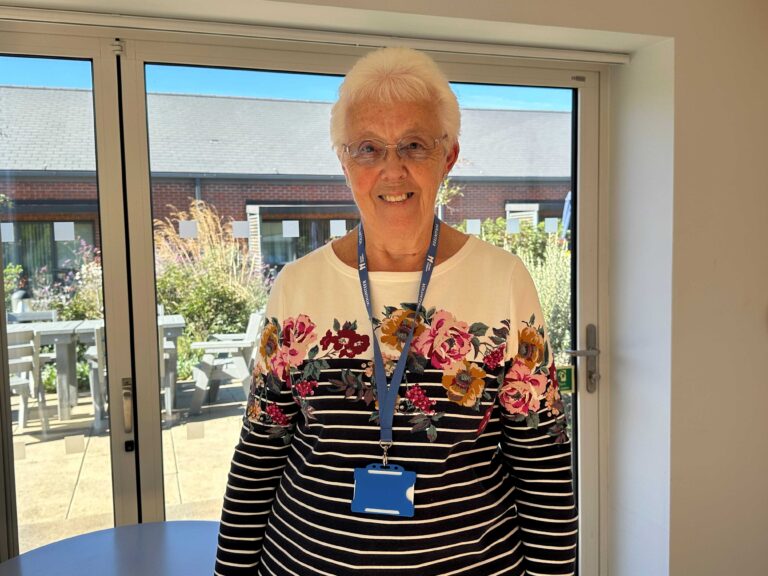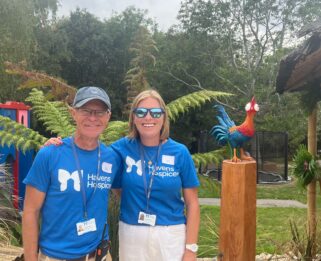

Havens Hospices volunteer Barbara Savill, 83, from Great Wakering, has been shortlisted for the Health and Wellbeing Award at this year’s Southend Volunteer Awards.
Now in their third year, the Southend Volunteer Awards, organised by the Southend Association of Voluntary Services (SAVS), recognise volunteers across the city who give their time and expertise to support others.
The Health and Wellbeing Award celebrates volunteers who support the wellbeing of people in their community – something Barbara has done for more than eight years at the Fair Havens Carers Support Group.
Each Thursday, at the charity’s adult hospice in Prittlewell – Fair Havens, she helps guide the group, giving unpaid carers space to talk openly about how they’re feeling, share practical advice and support one another.
Barbara’s own experience shapes the support she gives. She cared for her husband Brian, who had a rare long-term lung disease, for around five years. The Fair Havens Community Team cared for him at home, and he died at Fair Havens in 2016. While caring for Brian, Barbara attended the Carers Support Group herself, and a few years after his death the hospice’s social worker asked if she would help run it.
Speaking about her nomination, she says, “It was a surprise because I don’t do it for recognition. I do it because I was helped when Brian was ill, and I just do it to repay that and to help people who are in my situation.”
The group combines peer support with practical help, with visitors such as a solicitor, a palliative care nurse and an advocacy worker joining sessions. Barbara is also a strong advocate for the rights of unpaid carers, taking part in Fair Havens activities for Carers Week and Carers Rights Day.
Kim Hamber, Volunteer Experience Manager at Havens Hospices, said: “We’re so proud of Barbara for being shortlisted. She brings something to the Carers Support Group that can’t be taught, because she’s lived it herself, and the carers know she understands. Week after week, she listens, shares what she’s learned, and reminds people to look after themselves, too. We couldn’t do what we do without volunteers like Barbara, and whatever happens on 22 October, she’s already made a huge difference to the carers she supports.”
Volunteers support Havens Hospices across its services, from the Fair Havens Inpatient Unit and Wellbeing Team to its charity shops and more. They work alongside the charity’s clinical and support teams, helping them care for people living with incurable conditions and their families at home, in the community and in its hospices.
Anyone interested in volunteering with Havens Hospices can find out more at www.havenshospices.org.uk/volunteer.
The Southend Volunteer Awards are organised by the Southend Association of Voluntary Services (SAVS). The winners will be announced at the finals dinner at the Cliffs Pavilion on Thursday 22 October.
Published 16th October