
During Children’s Hospice Week (15–21 June 2026), Havens Hospices is adding its voice to a national call for fairer, more sustainable funding for children’s hospice care — as a new report published this week by Together for Short Lives, the leading UK-wide charity for children’s palliative care, reveals the scale of the challenge facing the sector.
At Little Havens, the charity’s children’s hospice, 316 children were supported last year across Essex, plus countless family members, including parents, carers and siblings. The hours of care delivered in its Inpatient Unit – children staying overnight for respite or care at the end of their life – rose by 16.4% on the previous year. The majority of the funding needed to provide that care comes from the generosity of local people — through donations, grants, fundraising, charity shops and gifts in wills — not from government.
The Together for Short Lives report found that across the UK, children’s hospices spent 18% more on their services in 2025/26 than the previous year, driven by rising workforce costs, growing demand and increasingly complex care needs. In England, for every £1 spent by the NHS and councils, children’s hospices are now providing nearly £4 in care and support – funded by local communities and charitable reserves. One third of children’s hospices have been forced to reduce respite and short break provision as a direct result, while 11% have cut back on end of life care services, and 15% have reduced their hospice-at-home service.
Louise Bryan, CEO and Finance Director of Havens Hospices, said, “The care our teams provide every day is only possible because of the people in Essex who support us, and we are genuinely grateful for that.
“We’re also thankful to the Essex Integrated Care Board, whose investment in children’s hospice care is above the national average. However, last year, that contribution represented less than 10% of the cost of providing our care, which is not sustainable.
“We need to be honest about the wider picture. The number of children coming to us for care has grown by 24% since 2020/21, and our costs are rising — staffing, energy, medical supplies — and the gap between what statutory funding covers and what it actually costs to provide this care is growing every year.
“Without a change in how hospice care is funded, difficult decisions may need to be made about the level of care we can provide. We’re delivering what is essentially a core NHS service — funded by donations and the generosity of people across Essex. That shouldn’t rest so heavily on charity.
“We are working closely with our commissioners in the hope that we can find a way forward together that protects future services for families across Essex, and will continue to work with Together for Short Lives and our local MPs to push for a fairer model.”
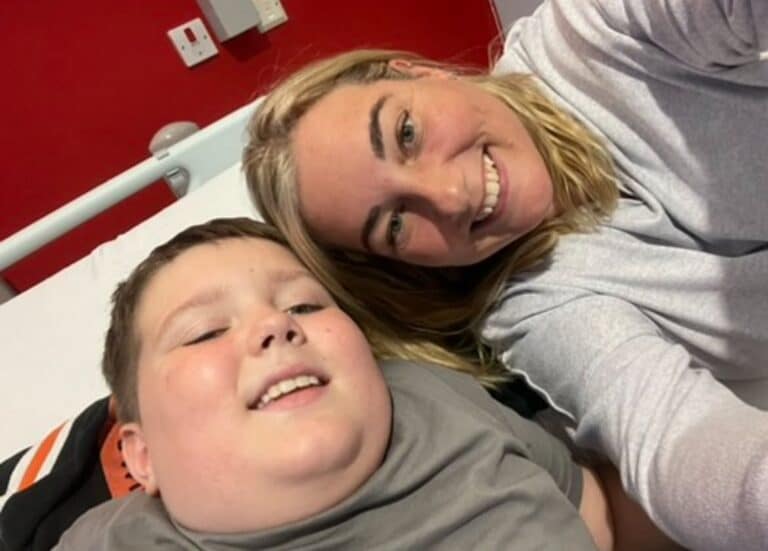
Oliver Robson’s family know first-hand what that care means. Oliver was nine years old when a grand mal seizure led to a devastating diagnosis: a high-grade glioma brain tumour. His parents, Anna and Paul, were told he had six to twelve months to live.
Anna, Oliver’s mum, said, “The floor just fell away. There were no signs beforehand. Nothing.”
Oliver began radiotherapy and chemotherapy almost immediately. Despite his illness, he was proud to take part in clinical trials to help others. He passed his 11+ even after missing a year of school. His mum describes him as “the nicest boy going” — an old soul, loved by everyone, and mad about animals.
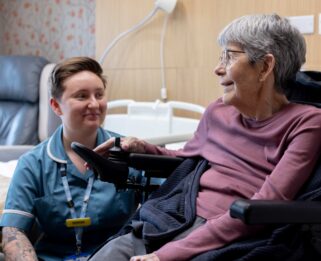
When Oliver first became unwell, the family was referred to Little Havens, which provides expert, compassionate care for babies, children and young people with complex or incurable conditions right across Essex.
Anna said, “It’s not somewhere you ever want to be, but it became really important for us.”
At Little Havens, Oliver learned to play the ukulele with music therapist Ruth, with his brother George by his side. He used the swimming pool, took part in activities, the opportunity to be a child again.
The hospice also arranged a trip to Winter Wonderland for Anna and Oliver, and helped the whole family — including George — through art therapy, music therapy and sibling activities. George attended a sibling trip to an alpaca farm, organised by Little Havens, giving him time with other children who truly understood what he was going through.
Anna said, “You have to balance both children. It’s easy to focus on the one who is ill, but the other child matters just as much.”
As Oliver’s condition progressed, the family continued to care for him at home for as long as possible. Little Havens’ Youth Worker became an invaluable source of support — spending time with Oliver, playing games and adapting activities as his abilities changed, and sitting with Anna when she needed someone to talk to.
Anna said, “The biggest thing was that I trusted him. There aren’t many people you can leave your child with at that stage. Even a small break lets you reset — I could come back and feel like, right, I can cope again now.”
In January 2025, Oliver became more unwell, and his family didn’t feel like they could care for him at home anymore. Unable to speak, Oliver was asked if he wanted to move to Little Havens. He gave a thumbs-up.
The family initially thought he might have only days left. They stayed for three weeks.
Anna said, “What the hospice gives you is space. You’re not just a carer anymore — you can be a parent again.”
Oliver had his own room and could have friends and family visit. The care team managed his symptoms and brought in goats to visit — because Oliver had always loved animals.
Anna said, “Even though he couldn’t speak, you could see he loved it. Someone brings you tea. Someone is there to step in. You’re not dealing with everything yourself.”
Oliver died at Little Havens on 21 February 2025. He was 11 years old.
Anna’s message to other families facing similar circumstances is simple: “Try everything. See what support is there. It’s not just about dying — it’s about living, memory-making, support, and feeling less alone. You can’t control their illness, but you can control how you spend your time with your child and the care they receive.”
Louise Bryan says, “Oliver’s story stays with you. The care his family received — the music therapy, the sibling support, even the animal visits — that’s what our Care Teams do every day, and it’s only possible because of the people in Essex who support us. We are genuinely grateful for that. Every donation, every shop purchase, every gift in a will means families across Essex can access the expert, compassionate care that only we can provide — today and in the future.”
It costs Little Havens more than £82,000 every week to provide this care, completely free of charge.
To make a donation this Children’s Hospice Week and help Little Havens be there for more families like Oliver’s, visit: www.havenshospices.org.uk/chw-2026